Family time—reimagined with the new Harmony at Home App. Learn More

  • New Research Suggests Consistent Implementation Leads to Success


    Read the latest brief from Sanford Harmony and Johns Hopkins University
    Ever wonder how consistently implementing healthy learning practices influences student outcomes as they learn and grow? Social, personal, and academic development is a priority among educators and school leaders who may activate many strategies and supports, such as the Harmony Curriculum, to reach their goals.

    We want practitioners and administrators to be successful, so we partnered with researchers at Johns Hopkins University to take an in-depth look at what Harmony schools experience when they use the program over time. By observing a group of Harmony Showcase Schools, researchers found out how principals, teachers, and students responded to Harmony in their first and second years of implementation. We found that teachers implemented the program more consistently and with improved implementation in their second year.

    While putting a schoolwide program like Harmony into practice can be challenging, especially during the initial execution, the research in this study suggests that when schools sustain their implementation past the initial growing pains, they find even more benefits beyond the first year. Read the full research brief to learn how educators and students engaged with Harmony in both years one and two. Based on the findings, you will discover potential implications to take back to your setting to successfully implement Harmony healthy learning.

    Learn more at harmony-academy.org

  • Read Healthy Learning Best Practices for School Leaders and Principals

    Access the latest research-to-practice brief from Johns Hopkins University and Sanford Harmony. 

    School leaders have a clear role to play in supporting healthy learning within their schools and with their out-of-school time partners. Many school leaders want to implement healthy learning strategies but face key challenges when they attempt to integrate this programming into their school structure. Common challenges include lack of instructional time, inadequate implementation support, and limited common knowledge of healthy learning practices among teachers and support staff. We partnered with Johns Hopkins University to find research-based solutions and practices that school leaders and principals can activate for successful Harmony-Academic integration and outcomes, particularly when schools and communities implement the Harmony Curriculum.  

    Download our latest research-to-practice brief, full of best practices that support schoolwide implementation of healthy learning programs and practices.

    Download Now

    This new research gives particular attention to strategies and research support related to Harmony, an evidence-based healthy learning program affiliated with National University, and to other approaches used by school leaders nationally, to promote effective implementation of Harmony-Academic integration in their schools. This report builds on work presented in an earlier brief developed for classroom teachers (Reilly, Yoder, Ross, et al., 2021). Access the brief for teachers here.

    Learn more at harmony-academy.org.

  • Harmony And Johns Hopkins University Share Healthy Learning Best Practices

    Harmony And Johns Hopkins University Share Healthy Learning Best Practices

    Download the latest research-to-practice brief on the components of effective social, personal, and academic development..


    Now more than ever, educators want strategies to support the social, personal, and academic needs of their students. However, it is not always clear where to start, or which active ingredients are needed for effective healthy learning programs. Fortunately, research demonstrates what classroom teachers need to understand about effective strategies that promote the social, personal, and academic development of students.

    In a new research-to-practice brief, researchers and practitioners from Johns Hopkins University and Sanford Harmony explore what Harmony entails, its research base, and most critically, the best practices for implementing Harmony in contemporary classrooms.

    Ready to enrich your learning community? Download the full article at no cost to inform healthy learning implementation in your classroom or district.


    Download Now


    Do you want to bring Harmony to your school or district? Learn more on our website harmony-academy.org.


  • Master the Art of Healthy Learning at National University

    Healthy learning helps students — both children and adults — better understand their thoughts and emotions to become more self-aware and to develop more empathy for others within their community and the world around them. When incorporated into daily learning through programs like Harmony, students can learn skills like communication, problem solving, self-awareness, and more. These skills can lead to better academic performance, healthier peer relationships, and more positive behaviors both in and outside of the classroom — now and into the future.

    As experts in the world of healthy learning, our programs support educators nationwide with the latest information, research, and resources to keep relationship skills top of mind and encourage whole-child education. Seeking to create positive change, our programs helps educators develop the relationship skills for inspired teaching and effective classroom leadership.

    The Sanford College of Education at National University — a partner institution, is a leader in healthy learning, making classrooms welcoming and productive with tools and materials for teachers to implement in grades Pre-K-12. Now, National University is offering a new degree program designed to empower educators and administrators to continue to make transformative changes in their school communities. Learn more about the degree here.

    This unique master’s program equips educators with research-based knowledge and skills in well-being, cognition, trauma, and the ability to create healthy environments and relationships that are culturally responsive, accessible, and supportive for the whole child. This deep dive into personal identity, culture, leadership, community, and programs provides a healthy learning foundation where positive school climates thrive.

    By fostering a sense of connection and belonging, Harmony can have a positive impact that lasts a lifetime. Through this innovative master’s degree, educators can take concrete steps to develop their own relationship skills, become more inspired and effective leaders, and transform the lives of students and communities nationwide.

    Learn More

  • The 2020 STA Winners Share Their Distance Learning Stories

    We are thrilled to celebrate and recognize all our Teacher Award Winners for exemplifying inspirational instruction in the classroom and remote learning settings. Over the past few months, educators across the country have worked tirelessly to provide engaging and inspirational distance learning to students. School closures and stay-at-home orders have emphasized how important educators and school resources are to the well-being of their students. Many teachers are implementing strategies like they are pilots building their own planes mid-flight. This sense of urgency has fueled creativity and compassion, and we are excited to share distance learning stories and strategies from some of the 2020 Teacher Award winners in their own words.

    Melissa Collins

    John P. Freeman Optional School

    Memphis, Tennessee

    Melissa Collins has developed a highly interactive remote learning experience for her students by connecting with another class outside their district and involving parents in everyday learning opportunities. She also honored students by getting their families involved for a surprise drive-by celebration to commemorate their promotion to the next grade. Read her story:

    My class has collaborated with a New Jersey class and we have completed several projects together. We combined the pen pals to host a virtual cooking class with a real chef from Memphis. The students made a strawberry shortcake, turkey and cheese sandwich, and salad. Parents helped the students to create the meal as well. We completed a STEM project together. We created instruments out of recyclable items and played the instruments becoming One Band making One Sound. Also, my students have talked to STEM professionals for an entire week. We had a doctor discuss COVID-19, and I invited a psychologist to talk to students about their feelings and emotions.


    Mary Wentland

    Lakeland Union High School

    Minocqua, Wisconsin

    Throughout the school closure, Mary Wentland has made it a point to brighten the lives of her students and their families with check-in letters. She has creatively packaged this important communication in fun, lighthearted ways, like this delicious note wrapped in a popcorn box:

    I was just “popping in” to say “Hi” to see how my students and their families are doing.

    Alejandro Diasgranados

    Aiton Elementary School

    Washington, D.C.

    Alejandro Diasgranados and his students have felt the heavy impacts of COVID-19 in their community. Facing a technology gap, Mr. Diasgranados’ school district distributed devices for completing online work and learning packets for families without internet access. Using all sorts of communication tools, including video chat and phone, he has stayed connected with students and created spaces for them to connect with each other. Read his story:

    During a time like this I believe it’s important for students to still be able to engage in non-academic discussion and conversation with their classmates. I’ve provided them with a space to converse and provide support for each other much like we would during our Community Circles… Many students have lost loved ones, some parents have lost jobs, and others are working multiple jobs.

    I’ve also been able to support them through the tragic incidents that took place with Ahmaud Arbery and George Floyd. Providing students with social emotional support is critical during these times, so the majority of my conversations with students have been fun and lighthearted, similar to our classroom environment. We’ve made lunch together, talked about sports, music and video games, and they’ve also taught me a few new dances that they’ve learned.


    Maggie Murphy

    Piney Creek School

    Piney Creek, North Carolina

    Maggie Murphy is proud of the entire staff at Piney Creek School for stepping up to care for students and families in practical ways. Together, they are all doing their part to help the community stay healthy and connected even at a distance. Read her story:

    Our staff has all taken turns during the weeks to ride the yellow school buses to deliver meals to our families in need. My teaching partner and I have begun a Book Mobile to safely deliver books around the county. We load them in the back of the car, open the hatch from the inside, let kids get hand sanitizer, and then choose a book, garden kit, journal, etc. It has been so fun!! Our K-2 teachers also sent out “Flat Stanley” versions of themselves to the students to go on adventures. SO many great things happening!


    Michael Ginicola

    Nichols Elementary School

    Stratford, Connecticut

    Michael Ginicola, creator of The Phys. Ed. Depot, has been helping students and their families stay active while sheltering at home with limited space. Read his story and watch the video of Mr. Ginicola’s Virtual Field Day:

    I was really proud of running our first ever “virtual field day.” We saw wonderful results even as parents are struggling at home. We gave students a day off from other school content so they could focus on having fun at home with P.E. challenges. Being in a Title I school of 470 students, we never know what we’re going to get for engagement… so the results were overwhelming to me.

    Watch the video highlights that the parents shared!

    We are incredibly impressed by the 2020 Teacher Award winners as they demonstrate kindness and compassion while adapting to support the needs of our communities. It is an honor to share their stories. Check back with Inspire News as we continue to feature voices from the STA winners and their inspirational journeys.
  • Play Harmony Game Room on Android

    Check out the latest mobile-friendly updates and activities!


    We have big news about Harmony Game Room. You can now download the mobile app for Android devices from Google Play. Access all the fun on your phone or Chromebook at no cost. The app is also available for Apple devices from The App Store, so everyone can bring engaging Harmony activities to life at home or in a blended-learning classroom.

    What Else Is New for Harmony Game Room?

    The newest additions to Harmony Game Room will boost inclusion and respect, foster moments of reflection, and develop relaxing habits through mindfulness for children and adults.


    Commonalities Game: The digital version of this beloved Harmony game will help your students and children discover what they have in common with peers and family members while learning to embrace the differences that make us each unique.


    Tick Talk: Make space for students to share and reflect on what they have learned with the new Tick Talk feature.


    Relaxation Stations: Students and adults can reset, relax, and refocus with Relaxation Stations. Practice mindfulness with the latest activities, Breathe — a calming, animated breathing exercise — and the relaxing, distraction-busting Focus. More activities are coming soon!


    Tokens: Unlock fun tokens for teachers, parents, and boys and girls while you learn with the Harmony Game Room. Keep an eye out for Z, our special friend from outer space!


    How to Access Harmony Game Room

    Harmony Game Room is available for iOS on iPad and iPhone and Android devices including Chromebook. Download the app for your mobile device at no cost.


    What’s Coming Up from Harmony Game Room?

    We have many more games and features in store for you and your students. If you have apps set to update automatically, you’ll be sure to get each new release as soon as it becomes available. You can also follow Harmony on Facebook and Twitter and check the Online Learning Portal for the latest updates. We love staying connected with you — share your experiences with us as you play!


  • Access the New Harmony Game Room App on Mobile

    Access SEL lessons in the palm of your hand.

    Harmony SEL is excited to launch the first phase of the Harmony Game Room app for mobile users. Get started with fully digitized Quick Connection Cards. Parents and caretakers will find this especially helpful while learning SEL at home, and QC Cards are just the beginning!


    What’s Inside the First Game Room Launch?

    Now it’s easier than ever to play, share, and revisit your favorite Quick Connection Cards — without a printer. Check out the user-friendly features that make Harmony Game Room’s first launch a great SEL tool for students and their families:

    1. Access all the Quick Connection Cards for upper and lower grades.

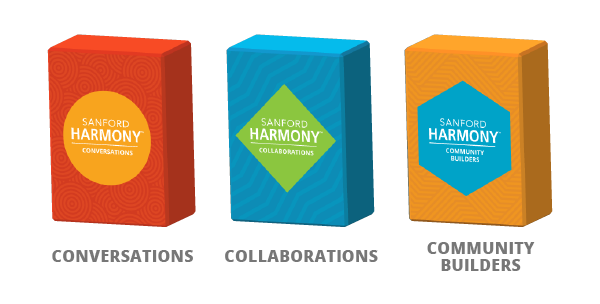
    1. Sort by category: Community Builders, Collaborations, and Conversations.

    1. Use the “Favorites” feature to save your favorite Meet Up and Buddy Up cards to use again and again.

    1. Unlock fun tokens for teachers, parents, and children while you learn with the Harmony SEL App (coming soon).

    1. Connect with the Spanish-language version of all Harmony content, available with a simple toggle.

    How to Access Harmony Game Room
    Harmony Game Room is available for iOS on iPad and iPhone. We are working diligently to make this available on Android devices soon, including Chromebook. You can download the app at no cost from the App Store now, and from Google Play as soon as we launch the Android version.

    What’s Coming Up from Harmony Game Room?
    We’re so glad you’re curious to find out. The Commonalities game is coming up next. Your students and children — and grown up family members, too — will enjoy learning about the commonalities you share with each other. You might even discover some surprises. Follow Harmony SEL on Facebook and Twitter and check the Online Learning Portal for the latest updates.


    Playing is an important part of learning. We can’t wait to see how you incorporate Harmony Game Room into your remote classroom or at home!