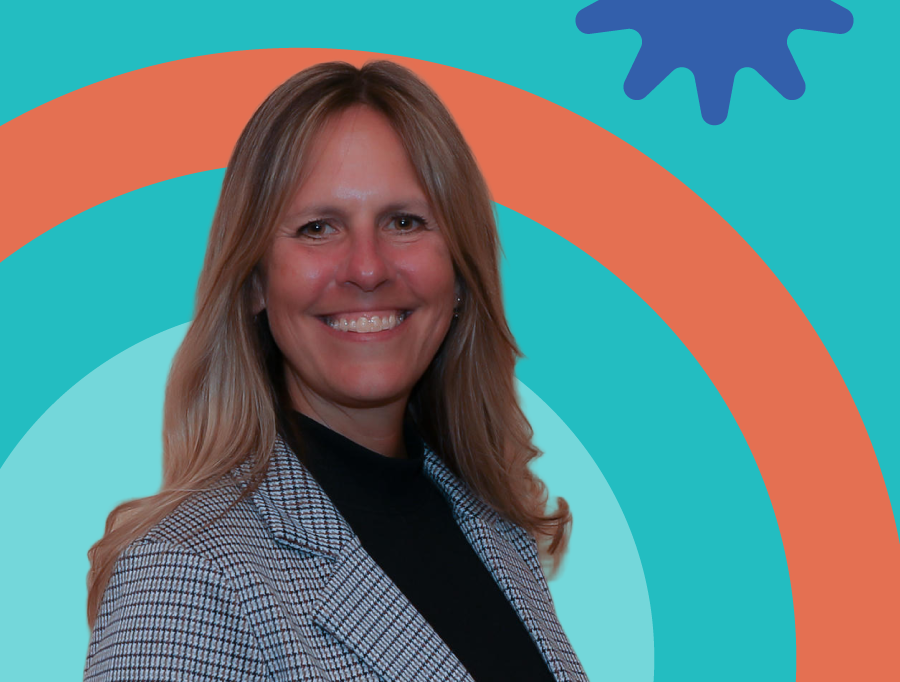
By Dr. Deborah Bergeron Deputy Director | Community Engagement Innovation National Head Start Association
Harmony Begins in the Early Years
At the National Head Start Association (NHSA), we know what our youngest learners need for a strong start and a stronger future. Research shows that teaching relationship-centered skills early – birth to age six – yields improved outcomes in behavior and self-regulation. For Head Start students, those skills become the foundation for healthy learning in elementary school and beyond. Children experiencing poverty, homelessness, or foster care placement typically need more support for healthy development, so program teachers and staff must stay intentional about reaching every child where they are.
Bringing Harmony to Our Classrooms
NHSA is fortunate to work with the Harmony curriculum and resources through Sanford Harmony to enhance our early childhood educator training, including the Child Development Associate (CDA) credential. Our professional learning prepares teachers to help young children acquire the relationship-focused skills that will serve them for years to come.
Through developmentally appropriate activities, stories, songs, and trust-building routines, children discover how to recognize feelings, show empathy, communicate with others, solve problems, and create positive connections with peers and adults. Sanford Harmony’s practical tools give teachers and families a trusted approach to nurturing belonging, cooperation, and healthy relationships.
Sanford Harmony’s practical tools give teachers and families a trusted approach to nurturing belonging, cooperation, and healthy relationships.
At a time when screens compete for children’s attention, the window for cultivating relationship-focused skills early has never mattered more. Teachers and school leaders have the opportunity to prioritize this development in the classrooms that focus on our earliest learners’ day-to-day experiences. This investment will pave the way for their futures as productive citizens in the communities they will one day shape.
About Dr. B
Dr. Deborah Bergeron, aka “Dr. B,” brings more than 30 years of experience in education and child development to her role as Deputy Director of Community Engagement and Innovation at the National Head Start Association. She previously served as Director of the Office of Head Start and Deputy Assistant Secretary for the Office of Early Childhood Development at the U.S. Department of Health and Human Services, where she championed policies supporting the nation’s most vulnerable children. A former classroom teacher and school administrator, Dr. Bergeron holds a Ph.D. in Education Policy and Educational Psychology.
Welcome Back! Family Strategies for a Strong Start to the New School Year!
Parents and caretakers, there’s no better time than the first weeks of school to build a strong foundation for your child’s personal, social, and academic success.
We’re excited to share our Key Steps for a Successful School Year Toolkit, designed especially for the 2026–2027 school year! It features insights and strategies from experienced educators who are part of our Harmony Educator Advisory Group. These leaders have spent decades positively shaping classrooms and healthy learning across the country.
This toolkit isn’t just another back-to-school checklist. We’re offering practical, research-informed guidance to support your children in meaningful ways. Inside, you’ll find tools and tips to help your child:
Build strong, healthy relationships
Develop a sense of belonging at school
Feel seen, heard, and understood
Strengthen their overall wellness and mental health
Sanford Harmony at National University draws from years of research and educator experience to create resources that prioritize what truly matters: relationships, belonging, and well-being. These foundational factors pave the way for lifelong success in school and beyond.
We hope you use our toolkit – available in both English and Spanish – to help your children thrive both in and outside of the classroom.
Special thanks to our educators who contributed their voices and expertise to our toolkit:
Get ready to spark connection and fun for the whole family! This new, innovative app makes it easy for busy families to support skill-building, strengthen connection, and enjoy quick, meaningful interactions every day. Learn More!
By: Miriam Blanc-Gonnet, Sr. Manager of User Strategy at Sanford Harmony
It’s that time of year again: notebooks, binders, and pencil pouches in vibrant colors and designs line the entryway of store aisles across the country. “Back to school” is upon us. Some of you may even already have your first week or two behind you.
As a former educator, I always felt equal parts excited and anxious in the weeks leading up to the first day of school. I could not wait to meet my students, and I planned all sorts of fun “get to know you” activities for us to do together. At the same time, I also couldn’t stop thinking about how that first day might go. Worries like, “Do I still remember how to teach?” or “When that 8 a.m. bell rings, will I still know what to do?” would race through my mind.
As we approach the beginning of another year, I want to remind you of something: your students are both excited and anxious, too — you are in this together. I encourage you to take this first week of school slowly and use it to foster relationships, develop community, put routines into place, and take care of yourself in the process. And if you’re looking for support for creating the best healthy learning environment, Sanford Harmony has resources to help you do just that.
Building a Community
To make the start of your school year a bit smoother, the Harmony Curriculum includes aBuilding Community Pre-Unit to guide you through your first ten days of school. The lessons within this unit offer simple relationship-building routines and activities designed to help both you and your students settle in and connect with each other.
During the first week, you’ll introduce Meet-Up, starting with simple steps like Greeting and Sharing and Responding.
For example, on Day One, your students might use the “25 Ways to Say Hello” resource to greet each other in creative ways. You could also model “Sharing” by telling a short story about how you felt preparing for the first day — then invite students to share and respond in return. As the week progresses, you’ll introduce the additional components of Meet-Up: Checking-In and Connecting.Another key practice introduced early on is Harmony Goals, where students create both class and personal goals. These help build ownership and shared expectations, contributing to a sense of belonging and collaboration in your learning environment. Goal-setting also becomes a powerful tool for reflection and accountability as the year unfolds.
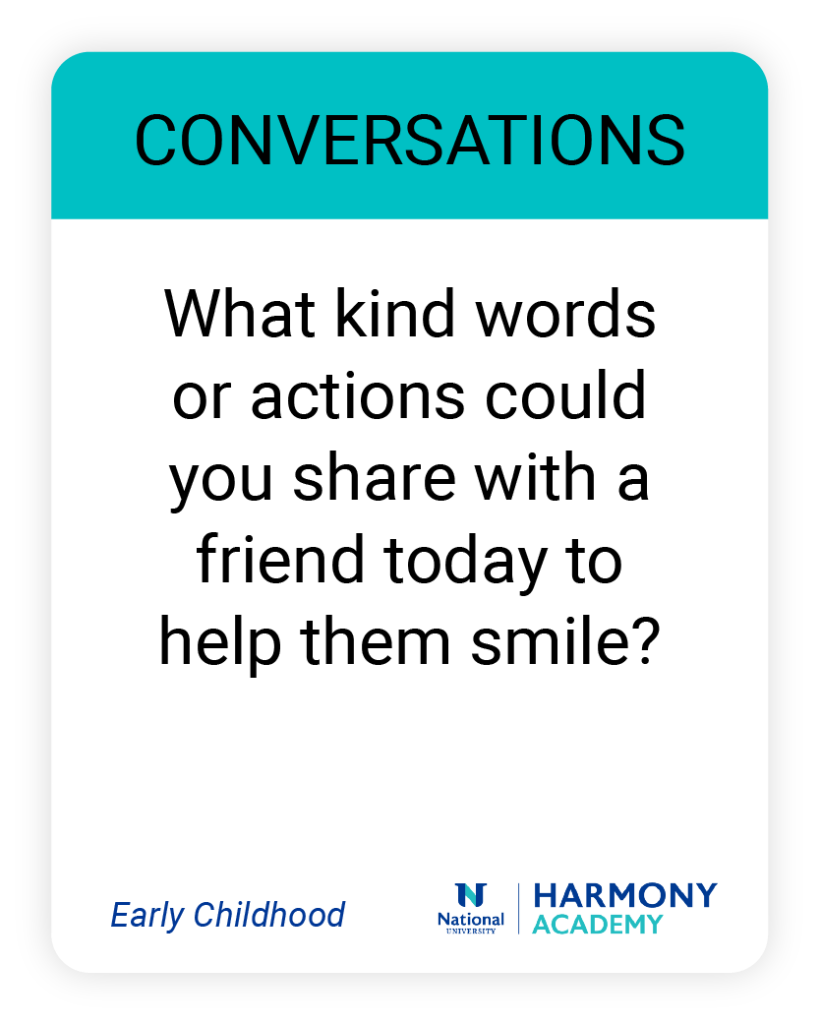
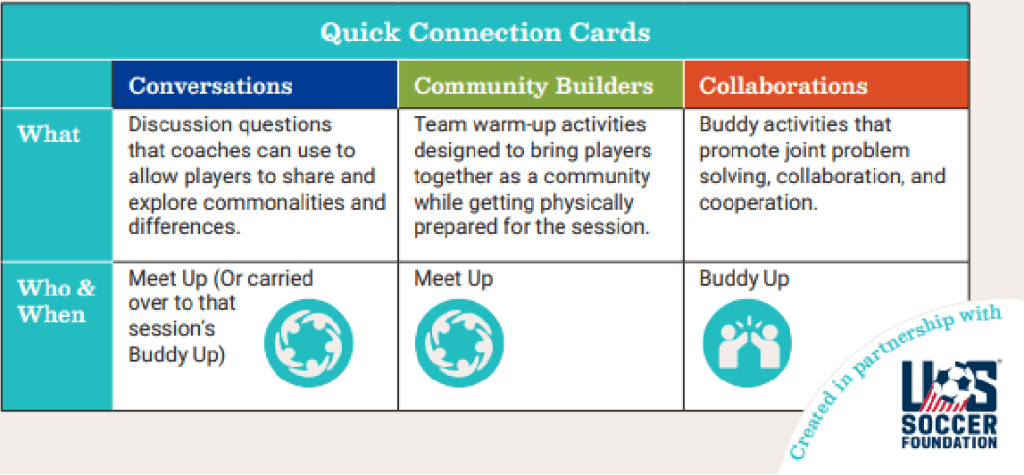
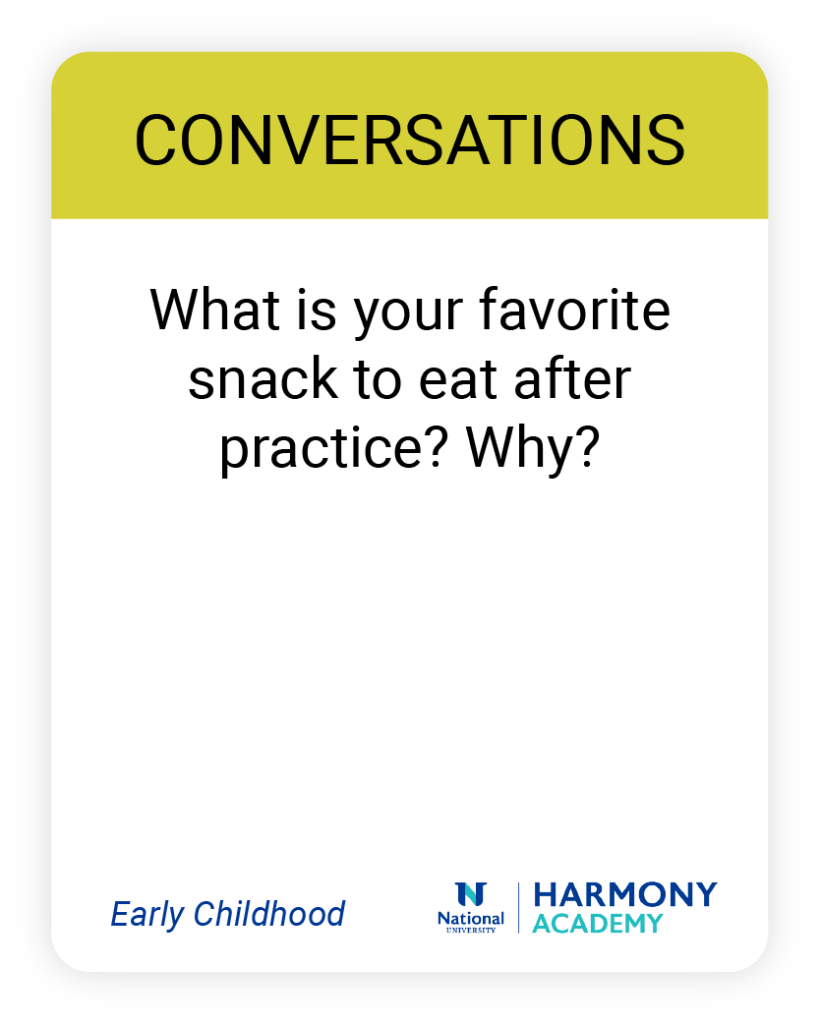
You’ll also introduce Buddy Up, a practice that encourages students to connect and collaborate with peers through age-appropriate prompts. Harmony’s updated Quick Connection Cards— designed for both classroom and out-of-school time — make this easy. Try one on the first day to help new buddy pairs break the ice:
Remember to Prioritize YOU!
In addition to this focus on developing community and establishing a routine, through the first few weeks (and the entire school year, really), you must prioritize filling your cup. 2019 National University Teacher of the Year and Educator Advisory Group member Tom Whisinnand (aka Mr. Whiz), has some great advice on this:
“Starting another school year can be a stressful time. There are many tasks that need to be accomplished and there is limited time to accomplish them. Starting a year by keeping YOUR personal worth in mind is mega-important!”
“Starting another school year can be a stressful time. There are many tasks that need to be accomplished and there is limited time to accomplish them. Starting a year by keeping YOUR personal worth in mind is mega-important! Teachers MUST look after their own well-being Just as we set up routines in our classrooms that empower students to embrace social, emotional, and academic learning, we MUST start the year by embedding these practices in our personal lives.”
Additionally, Mr. Whiz shares his tips for educator self-care during the upcoming school year.
“During this upcoming year, I will be looking after my own well-being in the following ways: 1) I will be visiting a gym on a regular basis; 2) I will create and maintain professional/personal work boundaries; AND 3) I will engage in a creative activity (painting/writing/drawing/producing YouTubes) at least once during any given weekend.”
Mr. Whiz is spot-on. You need to consider how you will maintain your own mental, emotional, and physical health during what is often a chaotic time.
Want a Little Extra?
Everything you need to implement Harmony is available to you at no cost through our Online Learning Portal — including full access to the Building Community unit, Everyday Practices, and digital storybooks.
We also know that many educators appreciate having ready-to-useand printed materials. That’s why we offer a selection of premium resources, designed to make implementation even easier.
Harmony Classroom Kit:
If you prefer having ready-to-use materials on hand, the Harmony Classroom Kit offers printed resources to support your implementation. It includes over 200 Quick Connection Cards for peer conversations, engaging story books for Pre-K–5th, a plush Z doll to help bring lessons to life, and grade-level literature guides developed to integrate relationship skills into literacy instruction. These tools help make Harmony even more accessible in your classroom.
We can’t wait to share our new app with you this fall! You will soon be able to encourage families to support their child’s development of essential skills, promote well-being, and strengthen relationships at home with the Harmony at Home app — designed to make it easy to extend classroom learning into everyday family life through quick, on-the-go activities. Follow us on social media for the launch date!
You’ve Got This!
Starting a new school year is a big deal — for you and your students. Remember to give yourself grace, celebrate the small wins, and prioritize connection over perfection. The learning will come — what matters most right now is helping your students feel like they belong.
We encourage you to get started exploring our Harmony Curriculum in the Harmony Online Learning Portal, and follow us on social media for more exciting updates this fall.
We hope you have an amazing start to the new school year!
Miriam Blanc-Gonnet, Sr. Manager of User Strategy at Sanford Harmony
Originally published on 08/06/2025, updated on 07/17/2026
Build Stronger Connections Beyond the School Day with Harmony
Build Stronger Connections Beyond the School Day with Harmony
At Harmony, we believe learning doesn’t stop when the school bell rings. Harmony Out-of-School Time (OST) provides students with meaningful opportunities to develop and apply personal, relational, and academic skills in enriching, real-world environments.
Whether it’s during after-school programs, summer camps, or youth sports, Harmony OST empowers youth to build healthy relationships and strengthen skills beyond the classroom.
Through a collaboration with the U.S. Soccer Foundation, we discovered they had a similar focus on supporting champions on and off the field.
“Sport has limitless power to transform youth by fostering impactful, healthful connections with mentors and building life skills that extend beyond the game.”
– Audrey Shaw-Edwards, Director, Content & Education, U.S. Soccer Foundation
We know that strong teams start with strong relationships. Young people thrive when they have consistent, supportive opportunities to practice relationship-building and teamwork. Sports-based programs offer a unique space where youth can grow in confidence, connect with peers and mentors, and apply what they’ve learned in new and exciting ways.
That’s why Harmony offers flexible, engaging Everyday Practices and Lessons & Activities specifically designed for OST and sports-based program settings. These tools help youth develop essential skills for building healthy team dynamics on and off the field while nurturing a sense of belonging and community.
“Sport has limitless power to transform youth by fostering impactful, healthful connections with mentors and building life skills that extend beyond the game. Tapping into this potential by empowering leaders with the tools they need to build meaningful, lasting relationships with the youth they serve builds a foundation from which the next generation can experience success and growth.” — Audrey Shaw-Edwards, Director, Content & Education, U.S. Soccer Foundation
NEW This Summer!
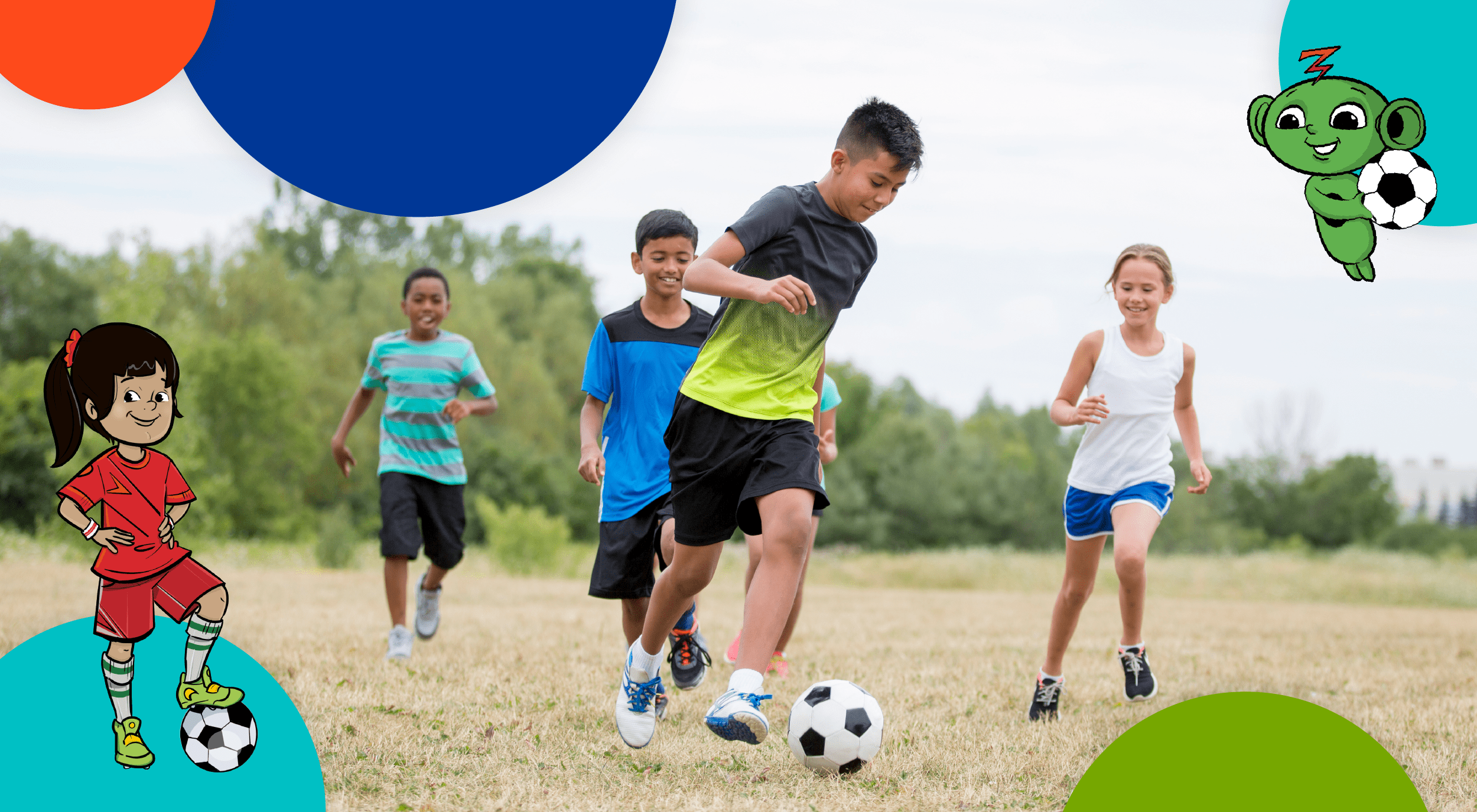
In our continued collaboration with the U.S. Soccer Foundation, Harmony has developed sports-based activities to help coaches, mentors, and sports educators promote teamwork, empathy, and respect — on and off the field.
These activities feature:
Custom Quick Connection Cards for sports settings
A focus on building strong peer and adult relationships
Adaptability for various OST and athletic programs
Whether you’re a coach, after-school coordinator, camp leader, or volunteer, Harmony OST provides everything you need to create a more connected, compassionate community for youth.
Originally published on 07/09/2025, updated on 07/09/2026
Beyond “Nice to Have”: The Science of Belonging as a Fundamental Need for Success
Beyond “Nice to Have”: The Science of Belonging as a Fundamental Need for Success
by Terrell Lamont Strayhorn, Ph.D., and Sarah Caverly, Ph.D.
In the ever-evolving contexts of education and today’s workplace, we often obsess over metrics. We track grades, graduation rates, quarterly earnings, and productivity hours with a fervor that suggests these numbers tell the whole story of human success. Success, however, is rarely the result of aptitude or efficiency alone; it is deeply rooted in a far more primal, essential necessity — the universal need to belong. We often underestimate the importance of a sense of belonging. Sense of belonging is defined as a basic need, a human right, a fundamental motive sufficient to drive human behavior, as vital to our survival as air, water, food, shelter, and sleep (Strayhorn, 2019).
It is not merely a “soft skill” or a warm-and-fuzzy feeling to be fostered after the real work is done; rather, it is the very conditions that make the “real work” possible. When we unpack the factors that comprise academic persistence, employee retention, and mental well-being, we find that one’s desire to feel connected, respected, and valued is the engine driving the machine.
True belonging is being accepted and valued for who you are, authentically and unapologetically.
What Belonging Is — and What It Is Not
To understand the power of belonging, we must first clarify what it means, as the term is often conflated with other concepts, such as community and engagement, to name a few. Belonging is not the same as “fitting in.” Fitting in implies a chameleon-like adaptability where one changes who they are to be accepted by the crowd; true belonging is being accepted and valued for who you are, authentically and unapologetically.
Belonging exists when you matter not because you assimilate, but because you are a distinctive, indispensable member of the community. According to research, some of which is my own, sense of belonging refers to a student’s or employee’s perceived social support, a feeling of connectedness, and the experience of mattering — feeling cared about, accepted, respected, valued by and important to the group. The group, in turn, depends on the individual for what they bring and who they are (Strayhorn, 2019).
This interdependence is crucial because belonging is inherently relational. It is not a fixed trait that you simply have or do not have; it’s a dynamic state that changes based on context, time, and circumstances (Strayhorn, 2026). It relies on what I call relational consistency — the reliable, recurring, purposeful interactions that provide evidence that one matters to the people around them. Approaches like those offered by Harmony Academy emphasize everyday interactions and routines that allow belonging to be reinforced consistently, even as students, classrooms, and contexts change. Whether in a classroom or a boardroom, individuals are constantly scanning their environment for cues of safety, security, and acceptance (hereafter in this series ‘identity safety cues’). Acceptance, once perceived, frees the mind to focus on higher-order tasks like self-reflection, creative exploration, intellectual risk-taking, and ethical reasoning.
The Profound Impact of Belonging: The Evidence
When the need to belong is met, the results are transformative across every dimension of human development. Scholars have demonstrated that human development, particularly in educational and professional settings, can be hindered when individuals feel invisible or isolated; however, it flourishes when they feel cared for, connected, safe, and secure, both physically and psychologically. For students, a strong sense of belonging is linked to better academic performance, increased persistence, a stronger sense of self, and higher self-efficacy. For educators, belonging reduces stress and is associated with greater productivity and retention (Strayhorn, 2010; 2025).
Building Belonging: From Theory to Practice
If belonging is the goal, how do we build it? We must move beyond passive platitudes to conscious construction. Construction of belonging-rich environments requires intentionality in our policies, practices, and everyday interactions.
In the Classroom and On Campus. For students, belonging is often fostered in the “small moments” of relational consistency. It is the teacher who learns names and pronounces them correctly. It is the syllabus that includes culturally-relevant scholars, signaling to students from all backgrounds that they have a place in the intellectual lineage of the field. It is also the presence of intentional, recurring practices such as those embedded in the Harmony Curriculum that create predictable opportunities for students to be seen, heard, and valued. Alongside high-impact practices like honors seminars, undergraduate research, service learning, and living-learning communities that structure social interaction around shared academic interests, these everyday moments become the glue of community.
Furthermore, we must help students develop navigational capacity — the skills and know-how to maneuver through complex institutional structures that were often not built for them. This involves clear access to advising that anticipates student needs rather than waiting for students to fail. Schools and districts can create visible, student-friendly systems such as “Where Do I Go?” hubs, designated staff points-of-contact, or simple digital help desks where students and families can quickly get answers about schedules, assignments, transportation, or resources. When students know where to turn and feel that the institution is actively trying to help them succeed, they are apt to feel like they belong.
In the Workplace. For employees, belonging begins with onboarding processes that do more than check boxes; they must connect new hires to the culture and people of the organization. Workplaces should facilitate ‘near peer’ mentorship and sponsorship opportunities, ensuring that everyone has a guide to help them navigate the professional landscape. That’s made easier when staff are recognized not just for their labor, but for their unique contributions — what psychologists call “ego-extension,” or the feeling that others share in your success (and frustration), and that your work represents the group.
Moving Beyond Deficit Framing: The Asset-Based Approach
To truly foster belonging, we must fundamentally shift our mindset regarding the people we serve. We serve best when we reject the “deficit model” that views students or employees as problems to be fixed. Fixed mindsets lead us to label students as “at-risk” and employees as “low performers” or “difficult,” labels that pathologize their backgrounds and ignore the systemic barriers they face.
Instead, we must adopt a strengths-based lens that views students and staff as “at-promise.” When we validate students or personnel — when we explicitly tell them, “You belong here, and you have what it takes” — we activate their resilience and grit. Grit, however, is not just about individual perseverance; it is about the environment providing the soil in which that perseverance can take root (Strayhorn, 2014). By focusing on assets rather than deficits, we signal that culture, identity, and language are not challenges to be managed, but resources to be celebrated and leveraged toward human success.
A Call to Action
The work of building belonging is never finished; it must be continually satisfied because circumstances and contexts change (Strayhorn, 2019). Change is the only constant in education and the workforce, and as we face new challenges, we must recommit to the human needs of our communities.
As we go into this series, here’s a set of questions and recommendations for those who lead, teach, and serve:
For Educators: Are you relying on “transactional” interactions that focus only on the task at hand, or are you building relational consistency by showing authentic care? Ask yourself: Do my students and staff know that I believe in them and their ability to grow?
For Community Leaders: How are you signaling to the most vulnerable among the community that they are indispensable to the whole? Are your spaces physically and psychologically safe for everyone, or do they only serve the majority?
For Families: How can you support the navigational capacity of your children by helping them affirm their sources of strength, and how do you co-engage with schools to support learning and development?
For Policymakers: Are your metrics of success limited to test scores and earnings, or do they account for the human need to belong? Are you funding the support structures — like counseling centers, gathering hubs, accommodations, and need-based aid — that make belonging possible?
For Organizations: Do you view belonging as a “pie in the sky” bonus, or as a strategic imperative for retention and innovation? Are you creating pathways for every employee to feel they matter?
Building belonging at scale requires both individual commitment and shared structures. When educators and organizations pair intentional mindsets with consistent, research-aligned practices, such as those reflected in the Harmony Curriculum, belonging moves from an aspiration to activation, from a magical moment to a daily lived experience.
Belonging is the thread that weaves our individual striving into a collective story of success. Success is within reach, but only if we ensure that every person who walks through our doors knows, without a shadow of a doubt: You matter. You are enough. You belong here. Just the way you are.
References
Strayhorn, T. L. (2014). What role does grit play in the academic success of black male collegians at predominantly white institutions? Journal of African American Studies, 18(1), 1–10. https://doi.org/10.1007/s12111-012-9243-0
Strayhorn, T. L. (2019). College students’ sense of belonging: A key to educational success for all students (2nd ed.). Routledge.
Integrate Belonging Into Summer Learning With Harmony!
Summer learning offers an opportunity to do more than keep students engaged. It’s also a chance to create learning environments where every student feels accepted, valued, and connected to their peers and teachers — the very definition of belonging within a school community.
Belonging research shows that students who feel a strong sense of belonging are more likely to participate, take academic and social risks, and persevere through challenges (Walton & Cohen, 2007). As a result, their learning and achievement outcomes improve (Fisher et al., 2025)!
Intentionally creating learning spaces where students feel they belong not only ensures they experience an enriching summer of learning, but can also inspire them to carry that momentum into the new school year.
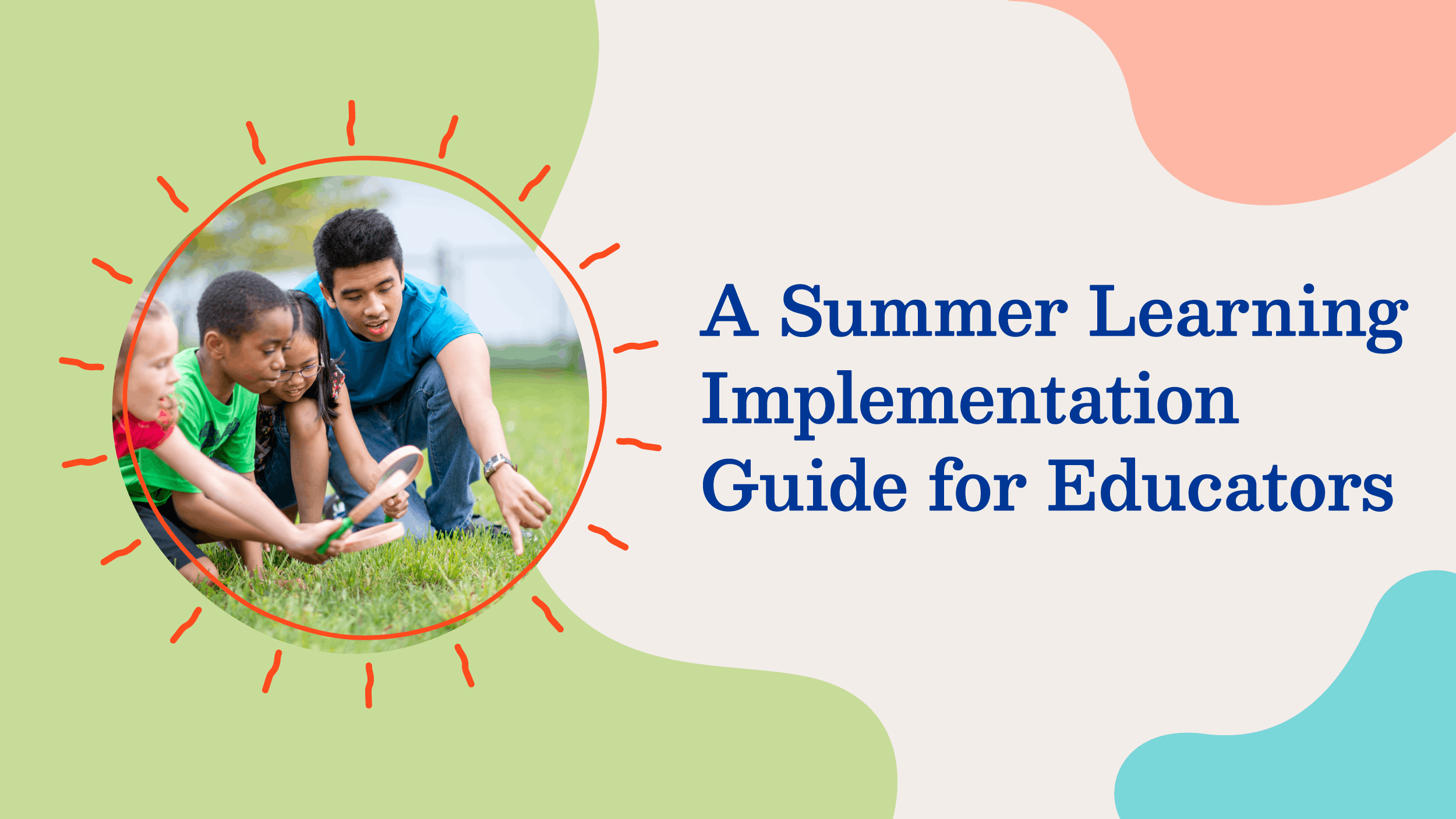
The Harmony Curriculum Summer Implementation Guide is your map for building that sense of belonging from day one. This guide centers the three main elements of Harmony Curriculum Everyday Practices — Harmony Goals, Meet Up, and Buddy Up — as well as the mini lessons.
The turnkey lessons provide step-by-step instructions and scripting to easily incorporate belonging practices into your summer school curriculum. You will be equipped to foster harmonious student relationships that strengthen their sense of community and drive meaningful learning outcomes.
Why Use Harmony This Summer?
Foster Belonging: Build community with students from day one using relationship-focused practices.
Promote Collaboration: Help students work better together through structured, engaging peer interactions.
Support Educator Wellness: Join our June and July live online training sessions for teacher self-care and well-being.
Walton, G. M., & Cohen, G. L. (2007). A question of belonging: Race, social fit, and achievement. Journal of Personality and Social Psychology, 92(1), 82–96. https://doi.org/10.1037/0022-3514.92.1.82
Originally published 05/14/2025. Update on 05/14/2026
Schools today are grappling with rising chronic absenteeism, widening learning gaps, and increasing teacher dissatisfaction. Belonging — the feeling of being accepted, valued, connected, and a contributor within a community — is a fundamental human need. Research consistently shows that fostering belonging strengthens both student outcomes and educator wellbeing. It’s not just a feeling to be nurtured, but a foundational condition that shapes school climates, instructional effectiveness, and student success.
This whitepaper explores:
Barriers to student and staff feeling a strong sense of belonging
What belonging looks like in practice for students and adults
Concrete strategies educators and leaders can take to promote belonging
Can Reading Books Make Kids Smarter and More Connected?
Can Reading Books Make Kids Smarter and More Connected?
By: Carol Jago &Sarah Caverly, Ph.D.
Can reading books make kids smarter and more connected? In her article for Time magazine, Annie Murphy Paul argues that it can. She discovered evidence that “individuals who often read fiction appear to be better able to understand other people, empathize with them and view the world from their perspective” (Paul, 2013). Cognitive psychologists observed a similar result in young children: the more stories they had read to them, the better they understood themselves and others (Mar et al., 2006; Mar et al., 2009; Mar et al., 2010).
As a teacher, I have seen firsthand how books offer children vicarious friendships with individuals they would never otherwise encounter. They allow for travel to destinations far and wide. Stories show students how others have dealt with challenges similar to their own. In myriad ways, literature teaches us that we are not alone.
Our youngsters are in desperate need of the connections that books can provide. As highlighted in a recent article by TheNew York TimesMagazine, young people are currently facing a significant mental health crisis. Jia Lynn Yang reports that nearly 32% of adolescents have been diagnosed with anxiety at some point in their lives, with a median age of onset of just six years old, and that more than one in ten adolescents have experienced a major depressive disorder (Avenevoli, 2015; Yang, 2025). Amid these challenges, many young people feel disconnected and uncertain about where they belong, making opportunities for connection, reflection, and shared meaning more important than ever.
Teachers across the country are reporting that their students are disaffected, disengaged from school, barely putting in seat time, and stuck in neutral. This may be a continuation of habits formed during the pandemic and/or a result of too much screen time, but the moment for excuses is past. We need to help students rediscover their learning gear.
3 Strategies to Foster Learning & Belonging Through Stories
In my experience, children shift from neutral to drive when they are interested in a topic. And exposing them to a broad range of issues, people, and places through books widens their circle of interest. Consider nonfiction titles along with fiction. For example, Yoshi and the Ocean: A Sea Turtle’s Incredible Journey Home by Lindsay Moore. This is the true story of a loggerhead sea turtle who was rescued by oceanographers after an injury to her shell. After a long career at an aquarium, Yoshi was released back into the wild with a tracker attached. Yoshi traveled over 25,000 miles in 1,003 days in order to find her way back home.
Yoshi knew in her bones where she belonged.
Along with being an inspirational story of determination and perseverance, the book provides detailed information about the ocean, currents, food chain, and geography, providing a host of entry points for inquiry that children are keen to pursue.
Here are three strategies to foster this kind of engagement:
Include both fiction and nonfiction books in your classroom library: offering both expands students’ sense of what reading can be. Fiction encourages empathy and perspective-taking, while nonfiction invites curiosity about the real world and allows students to see their interests, identities, and questions reflected and valued.
Introduce students to fresh titles through an engaging read-aloud: Read-alouds lower the barrier to entry, especially for disengaged or reluctant readers. When students are invited into a story together, reading becomes a shared experience rather than a solitary task that sparks curiosity, discussion, and emotional connection.
Invite generous conversations about what it means to belong and how it feels when one feels left out: Creating space for these conversations requires more than good intentions. It requires shared language and structures that help students listen, reflect, and connect. Programs like Sanford Harmony support educators in turning literature into moments of connection by offering Storybooks and Literature Guide with discussion and reflection prompts, as well as Everyday Practices that help students explore belonging together.
When books open doors to new worlds, and classrooms offer space to reflect and connect — as they do through approaches like Harmony — students are reminded that learning is not something they do alone.
Maybe instead of trying to meet today’s students where they are, let’s show them how books can take them to places where they have never been. Reading may help our children become smarter and happier by fostering a sense of belonging within their peer groups, families, and school communities.
About Carol Jago
She has taught for over 30 years and serves as associate director of the California Reading and Literature at UCLA. She is a past president of the National Council of Teachers of English and received the Squire Award, honoring an individual who has had a transforming influence and has made a lasting intellectual contribution to the profession.
References
Avenevoli, S., Swendsen, J., He, J. P., Burstein, M., & Merikangas, K. R. (2015). Major depression in the national comorbidity survey-adolescent supplement: prevalence, correlates, and treatment. Journal of the American Academy of Child and Adolescent Psychiatry, 54(1), 37–44.e2. https://doi.org/10.1016/j.jaac.2014.10.010
Mar, R. A., Oatley, K., Hirsh, J., dela Paz, J., & Peterson, J. B. (2006). Bookworms versus nerds: Exposure to fiction versus non-fiction, divergent associations with social ability, and the simulation of fictional social worlds. Journal of Research in Personality, 40(5), 694–712. https://doi.org/doi.org/10.1016/j.jrp.2005.08.002
Mar, R., Oatley, K. & Peterson, J. (2009). Exploring the link between reading fiction and empathy: Ruling out individual differences and examining outcomes. Communications, 34(4), 407-428. https://doi.org/10.1515/COMM.2009.025
Mar, R. A., Tackett, J. L., & Moore, C. (2010). Exposure to media and theory-of-mind development in preschoolers. Cognitive Development, 25(1), 69–78. https://doi.org/10.1016/j.cogdev.2009.11.002
Moore, L. (2022). Yoshi and the Ocean: A Sea Turtle’s Incredible Journey Home. Greenwillow Books.