-
The Common Thread Behind Attendance, Engagement, Behavior and Achievement
By Nick Yoder, PhD
Associate Vice President, Innovation & ResearchThe Common Thread Behind Attendance, Engagement, Behavior and Achievement
District leaders are facing a long list of pressing issues: youth mental health, chronic absenteeism, student behavior, engagement and belonging, academic achievement and workforce readiness—all while managing tight budgets, staffing pressures and competing priorities.
Many of those pressures share a backdrop of growing disconnection. Young people report high levels of loneliness, and a growing number are turning to AI chatbots for companionship and advice, sometimes in place of the human relationships that help them thrive.
It is tempting to tackle each challenge separately. An attendance initiative for absenteeism. An academic intervention for achievement. A behavior strategy for discipline. A wellness program for mental health.
But these challenges have something important in common: the quality of students’ relationships and their connection to school.
When students feel known by adults, connected to peers and part of their school community, they are better positioned to participate, engage and learn. That makes relationships more than a school-climate issue. They are part of the conditions for student success.
Look for the Common Denominator
For district leaders, a useful question is: What conditions could help us make progress across several priorities at once?
The research tells me that relationships are one of those conditions.
We know that healthy relationships don’t simply happen because students share a classroom. Students need opportunities to connect, skills to build and maintain relationships, and environments that make those connections possible. When those conditions are in place, the effects can extend well beyond whether a student feels like they belong.
Richard Carranza, former Chancellor of New York City Public Schools, has seen that connection at the system level:
“When districts invest in the practices that help adults connect, reflect, and solve problems together, the payoff is real: steadier teams, stronger follow-through, and classrooms where students are more present and ready to succeed.”
Richard Carranza, former Chancellor of New York City Public Schools
What a Decade of Research Has Shown
That is what we have seen in more than a decade of research on Sanford Harmony. As detailed in our new report, Why Harmony Matters in Schools and Communities, randomized controlled trials and other studies have found improvements in peer relationships, prosocial behavior, school connection and academic outcomes, along with reductions in aggression and bullying.
Across studies, the Sanford Harmony approach has been associated with a 6% improvement in both academic achievement and classroom connection, a 10% increase in school enjoyment, and a 34% reduction in aggression and bullying.
And our Buddy Up practice specifically delivered a 67% increase in playing with new classmates and a 54% decrease in aggressive behavior.
The important point for district leaders isn’t any single number. It’s the pattern across the findings.
From Good Classroom Practice to Districtwide Impact
Most districts don’t need to be convinced that relationships matter. The harder question is how to make relationship-building intentional and consistent across classrooms and schools.
As Dr. Ruby Ababio-Fernandez, a former senior leader in New York City Public Schools, has said, building strong school relationships “isn’t just a feeling—it’s something leaders can design for.”
Building strong school relationships “isn’t just a feeling—it’s something leaders can design for.”
Dr. Ruby Ababio-Fernandez, former senior leader in New York City Public Schools
That distinction matters. When relationship-building depends primarily on the instincts and practices of individual educators, students’ experiences can vary considerably from classroom to classroom. A shared approach gives educators common language, strategies and opportunities to build connection while still allowing teachers to respond to the students in front of them.
For superintendents, that also means relationship-building doesn’t have to become one more initiative competing for attention. Done well, it can strengthen work already underway around attendance, engagement, behavior, school climate and academic success.
Sanford Harmony was designed around that idea, giving educators research-based resources to intentionally build relationship skills, peer connections and classroom environments from pre-K through middle school.
Relationships will not solve every challenge facing schools. But when attendance, engagement, behavior and achievement are all on the agenda, the research suggests that strengthening relationships can support progress across them—and offers district leaders a strong place to start.
LEARN MORE
Explore the research and evidence behind this approach in Sanford Harmony’s new report, Why Harmony Matters in Schools and Communities, including findings on student connection, engagement, behavior and academic outcomes.
About Nick Yoder PhD

Nick Yoder, PhD is Associate Vice President of Innovation & Research at Sanford Harmony. A former first-grade teacher and instructional coach, he holds a PhD in Education and Psychology and works with schools to make relationship-building part of everyday learning.
-
Harmony Begins in the Early Years
By Dr. Deborah Bergeron
Deputy Director | Community Engagement Innovation
National Head Start AssociationHarmony Begins in the Early Years
At the National Head Start Association (NHSA), we know what our youngest learners need for a strong start and a stronger future. Research shows that teaching relationship-centered skills early – birth to age six – yields improved outcomes in behavior and self-regulation. For Head Start students, those skills become the foundation for healthy learning in elementary school and beyond. Children experiencing poverty, homelessness, or foster care placement typically need more support for healthy development, so program teachers and staff must stay intentional about reaching every child where they are.
Bringing Harmony to Our Classrooms
NHSA is fortunate to work with the Harmony curriculum and resources through Sanford Harmony to enhance our early childhood educator training, including the Child Development Associate (CDA) credential. Our professional learning prepares teachers to help young children acquire the relationship-focused skills that will serve them for years to come.
Through developmentally appropriate activities, stories, songs, and trust-building routines, children discover how to recognize feelings, show empathy, communicate with others, solve problems, and create positive connections with peers and adults. Sanford Harmony’s practical tools give teachers and families a trusted approach to nurturing belonging, cooperation, and healthy relationships.
Sanford Harmony’s practical tools give teachers and families a trusted approach to nurturing belonging, cooperation, and healthy relationships.
At a time when screens compete for children’s attention, the window for cultivating relationship-focused skills early has never mattered more. Teachers and school leaders have the opportunity to prioritize this development in the classrooms that focus on our earliest learners’ day-to-day experiences. This investment will pave the way for their futures as productive citizens in the communities they will one day shape.
About Dr. B
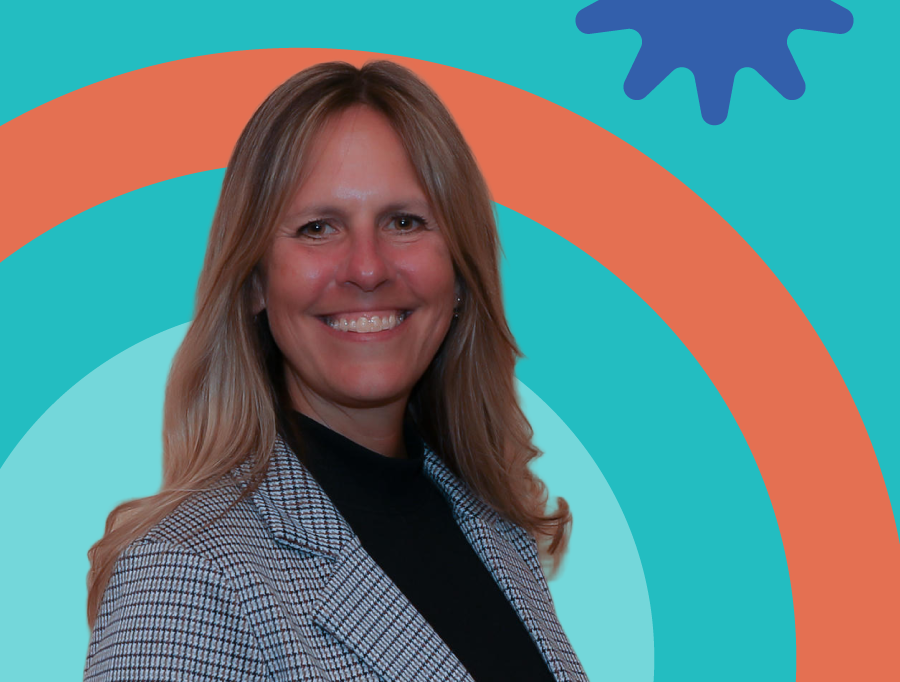
Dr. Deborah Bergeron, aka “Dr. B,” brings more than 30 years of experience in education and child development to her role as Deputy Director of Community Engagement and Innovation at the National Head Start Association. She previously served as Director of the Office of Head Start and Deputy Assistant Secretary for the Office of Early Childhood Development at the U.S. Department of Health and Human Services, where she championed policies supporting the nation’s most vulnerable children. A former classroom teacher and school administrator, Dr. Bergeron holds a Ph.D. in Education Policy and Educational Psychology.
-
Welcome Back! Family Strategies for a Strong Start to the New School Year!
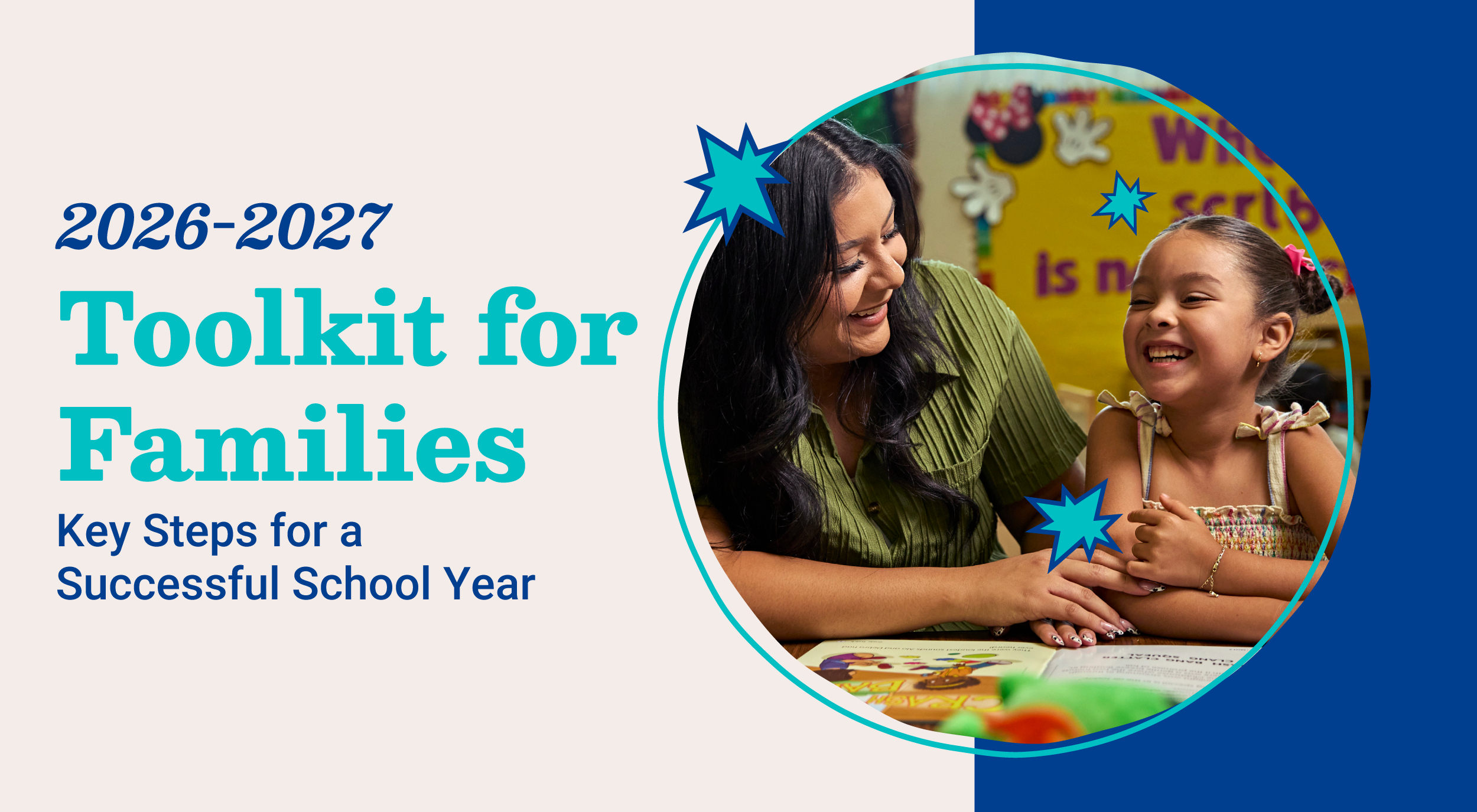
Parents and caretakers, there’s no better time than the first weeks of school to build a strong foundation for your child’s personal, social, and academic success.
We’re excited to share our Key Steps for a Successful School Year Toolkit, designed especially for the 2026–2027 school year! It features insights and strategies from experienced educators who are part of our Harmony Educator Advisory Group. These leaders have spent decades positively shaping classrooms and healthy learning across the country.
This toolkit isn’t just another back-to-school checklist. We’re offering practical, research-informed guidance to support your children in meaningful ways. Inside, you’ll find tools and tips to help your child:
- Build strong, healthy relationships
- Develop a sense of belonging at school
- Feel seen, heard, and understood
- Strengthen their overall wellness and mental health
Sanford Harmony at National University draws from years of research and educator experience to create resources that prioritize what truly matters: relationships, belonging, and well-being. These foundational factors pave the way for lifelong success in school and beyond.
We hope you use our toolkit – available in both English and Spanish – to help your children thrive both in and outside of the classroom.
Special thanks to our educators who contributed their voices and expertise to our toolkit:
- Daryl Williams Jr., K–12 School Leader, Charlotte, NC
- Cristy Fernandez, Grades 4–8 Teacher, Reno, NV
- Claudine James, ELA Middle School Teacher
- Tom Whisinnand, 5th Grade Teacher, Omaha, NE
Now Available: Harmony at Home App!
Get ready to spark connection and fun for the whole family! This new, innovative app makes it easy for busy families to support skill-building, strengthen connection, and enjoy quick, meaningful interactions every day. Learn More!
Originally published on 08/06/2025, updated on 08/05/2026
Related Posts
-
Back to School With Harmony!

Back to School With Harmony!
By: Miriam Blanc-Gonnet, Sr. Manager of User Strategy at Sanford Harmony
It’s that time of year again: notebooks, binders, and pencil pouches in vibrant colors and designs line the entryway of store aisles across the country. “Back to school” is upon us. Some of you may even already have your first week or two behind you.
As a former educator, I always felt equal parts excited and anxious in the weeks leading up to the first day of school. I could not wait to meet my students, and I planned all sorts of fun “get to know you” activities for us to do together. At the same time, I also couldn’t stop thinking about how that first day might go. Worries like, “Do I still remember how to teach?” or “When that 8 a.m. bell rings, will I still know what to do?” would race through my mind.
As we approach the beginning of another year, I want to remind you of something: your students are both excited and anxious, too — you are in this together. I encourage you to take this first week of school slowly and use it to foster relationships, develop community, put routines into place, and take care of yourself in the process. And if you’re looking for support for creating the best healthy learning environment, Sanford Harmony has resources to help you do just that.
Building a Community
To make the start of your school year a bit smoother, the Harmony Curriculum includes a Building Community Pre-Unit to guide you through your first ten days of school. The lessons within this unit offer simple relationship-building routines and activities designed to help both you and your students settle in and connect with each other.
During the first week, you’ll introduce Meet-Up, starting with simple steps like Greeting and Sharing and Responding.
For example, on Day One, your students might use the “25 Ways to Say Hello” resource to greet each other in creative ways. You could also model “Sharing” by telling a short story about how you felt preparing for the first day — then invite students to share and respond in return. As the week progresses, you’ll introduce the additional components of Meet-Up: Checking-In and Connecting.Another key practice introduced early on is Harmony Goals, where students create both class and personal goals. These help build ownership and shared expectations, contributing to a sense of belonging and collaboration in your learning environment. Goal-setting also becomes a powerful tool for reflection and accountability as the year unfolds.
You’ll also introduce Buddy Up, a practice that encourages students to connect and collaborate with peers through age-appropriate prompts. Harmony’s updated Quick Connection Cards — designed for both classroom and out-of-school time — make this easy. Try one on the first day to help new buddy pairs break the ice:
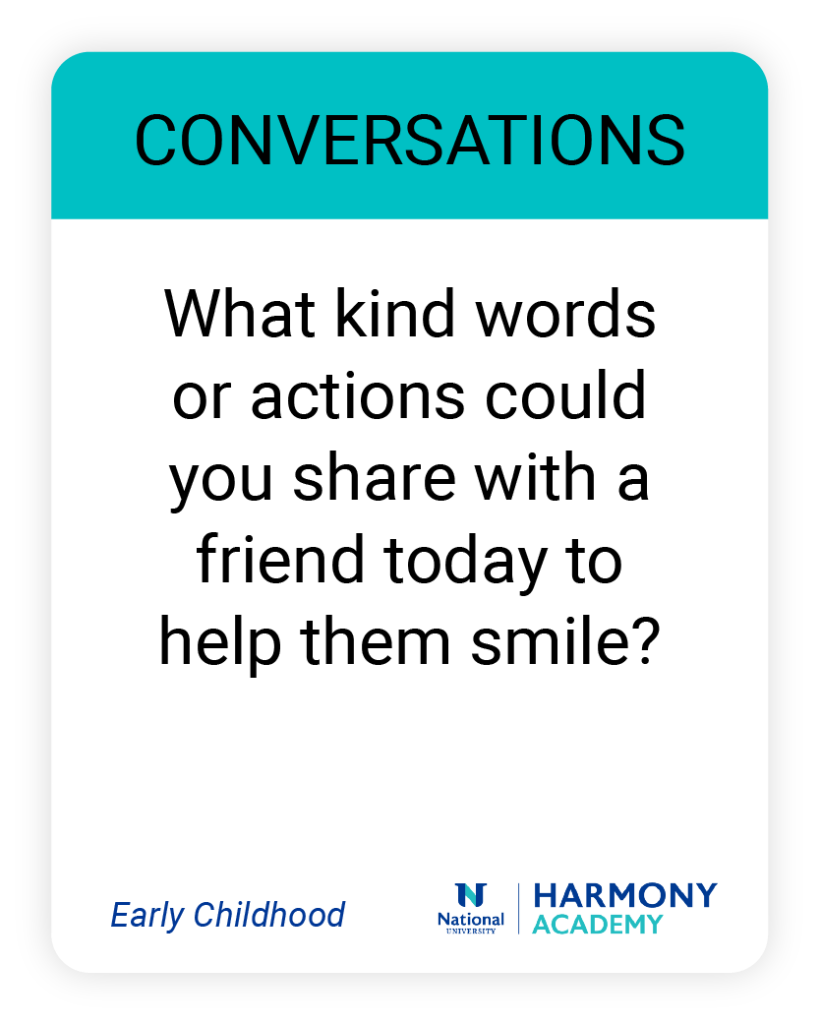
Remember to Prioritize YOU!
In addition to this focus on developing community and establishing a routine, through the first few weeks (and the entire school year, really), you must prioritize filling your cup. 2019 National University Teacher of the Year and Educator Advisory Group member Tom Whisinnand (aka Mr. Whiz), has some great advice on this:
“Starting another school year can be a stressful time. There are many tasks that need to be accomplished and there is limited time to accomplish them. Starting a year by keeping YOUR personal worth in mind is mega-important!”
“Starting another school year can be a stressful time. There are many tasks that need to be accomplished and there is limited time to accomplish them. Starting a year by keeping YOUR personal worth in mind is mega-important! Teachers MUST look after their own well-being Just as we set up routines in our classrooms that empower students to embrace social, emotional, and academic learning, we MUST start the year by embedding these practices in our personal lives.”
Additionally, Mr. Whiz shares his tips for educator self-care during the upcoming school year.
“During this upcoming year, I will be looking after my own well-being in the following ways: 1) I will be visiting a gym on a regular basis; 2) I will create and maintain professional/personal work boundaries; AND 3) I will engage in a creative activity (painting/writing/drawing/producing YouTubes) at least once during any given weekend.”
Mr. Whiz is spot-on. You need to consider how you will maintain your own mental, emotional, and physical health during what is often a chaotic time.
Want a Little Extra?
Everything you need to implement Harmony is available to you at no cost through our Online Learning Portal — including full access to the Building Community unit, Everyday Practices, and digital storybooks.
We also know that many educators appreciate having ready-to-use and printed materials. That’s why we offer a selection of premium resources, designed to make implementation even easier.
Harmony Classroom Kit:
If you prefer having ready-to-use materials on hand, the Harmony Classroom Kit offers printed resources to support your implementation. It includes over 200 Quick Connection Cards for peer conversations, engaging story books for Pre-K–5th, a plush Z doll to help bring lessons to life, and grade-level literature guides developed to integrate relationship skills into literacy instruction. These tools help make Harmony even more accessible in your classroom.
Coming Soon! Harmony at Home App
We can’t wait to share our new app with you this fall! You will soon be able to encourage families to support their child’s development of essential skills, promote well-being, and strengthen relationships at home with the Harmony at Home app — designed to make it easy to extend classroom learning into everyday family life through quick, on-the-go activities. Follow us on social media for the launch date!
You’ve Got This!
Starting a new school year is a big deal — for you and your students. Remember to give yourself grace, celebrate the small wins, and prioritize connection over perfection. The learning will come — what matters most right now is helping your students feel like they belong.
We encourage you to get started exploring our Harmony Curriculum in the Harmony Online Learning Portal, and follow us on social media for more exciting updates this fall.
We hope you have an amazing start to the new school year!
Miriam Blanc-Gonnet, Sr. Manager of User Strategy at Sanford Harmony
Originally published on 08/06/2025, updated on 07/17/2026
Related Posts
-
It’s Time to Shine: 6 Trauma-Informed Theatre Practices to Ease Stress
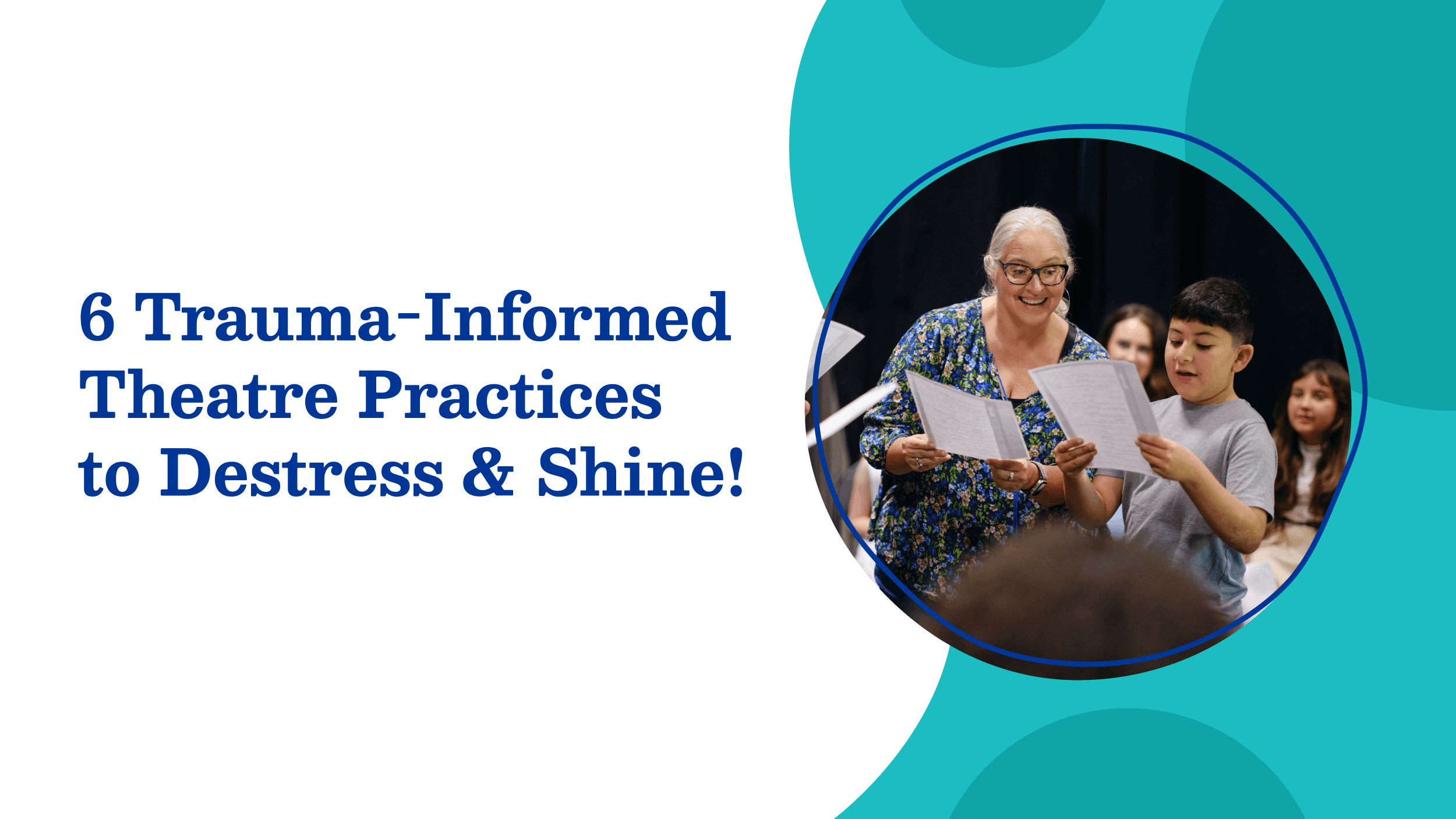
It’s Time to Shine: 6 Trauma-Informed Theatre Practices to Ease Stress
By Jennifer Wienke, Trauma-Informed Educator Fairbanks, Alaska
It’s National Stress Awareness Month, and as a trauma-informed theater educator at the Fairbanks Academy of Community Theatre (FACT) in Fairbanks, Alaska, it’s the perfect time to share strategies to help mitigate youth and family stress.
“Life-changing” is a word communicated to the FACT team often in emails, social media posts, and in the area on an audition form that asks for additional information to work better with families. These are words we deem common in our work.
But for the families we work with? It is life-changing.
Before diving into trauma-informed practices, I want to share a story of a 14-year-old student we work with. After a summer camp two years ago, we received a thank-you card signed by an entire family (mom, dad, and big brother). Their child was in our week-long camp and was a new face for us. He was a quiet student who didn’t speak to us or others, but that’s common in the theater world. Everyone needs time to settle in before their light gets to shine. What we didn’t know was that he was nonverbal and didn’t speak until well into middle school, and after, only spoke to family and close friends.
This was the moment we realized the value of our work and how it affects the people in our world.
6 Trauma-Informed Theatre Practices
Trauma-informed theater practice is the backbone of my organization in Fairbanks. We provide a safe space for all students and families, meeting everyone where they are while exploring the arts. When my partner and I began our company, we designed every facet with the mindset of what we wanted in a youth program growing up — a place that could give us a chance to explore theater and feel safe and nurtured when our homes did not provide the support we needed.
In each of our programs, we focus on developing connections, fostering a predictable environment, creating a strong sense of belonging, and building self-esteem for the youth we serve. We work extensively on confidence-building interactions, and we understand that everyone has a story. Our students, of all ages, come to us with past traumas. Our job is to create a safe space that resists retraumatization.
In my presentation, “Act It Up”: Trauma-Informed Theater Practices for Every Classroom, we walk through a typical rehearsal and explore how intentional practices can help students combat and manage stress, including:

A predictable schedule and routine to create stability

Warm welcomes to help every student feel seen and heard

Regular emotional check-ins to support self-awareness and regulation

Clear communication and choice, including opportunities to ask questions and opt out if needed

Tools for success, such as a cast website for each program, with resources to build confidence throughout the project

Thoughtful daily reflections to help students recognize their growth and take pride in their contributions
How Harmony Supports My Community
Sanford Harmony resources have been pivotal in helping our process, especially when working with our teen mentors as directors in training or camp mentors. Our mentors always have Quick Connection Cards ready in their badge holders to help campers build connections, resolve conflicts, or offer brain breaks. Since our programs all take place outside of the school day, we utilize Harmony Out-of-School Time (OST) lessons in our work, especially with our youngest cast members. Even the Harmony mascot Z has been seen perched on our light board or hanging backstage in a youth production for a quick hug if needed!
Stress and anxiety can peak at this time of year, especially with state testing approaching. Many parts of the trauma-informed approach can help families and educators by providing easy-to-implement tools with social, personal, and academic learning concepts. With a focus on belonging, clear communication, and brain breaks, stressful days can be more manageable for everyone.
A Life-Changing Transformation
It has been two years since the 14-year-old nonverbal student came to us. Since that time, he has had three leading roles and tons of ensemble roles, has become a camp mentor, and learned how to do sound and instruct small youth groups. On our most difficult days, we think of these stories, and we are inspired all over again.
Whether it’s Stress Awareness Month or any other time, always remember to power through, knowing we must continue offering tools for every person to find their “shine”.
Additional Time to Shine Resources:
Harmony Professional Learning Resources:
About the Author:

Jennifer Wienke is the current program development coordinator for Out-of-School programming in the Fairbanks North Star Borough School District. In her time off, she is the owner and director of the trauma-informed theater company, Fairbanks Academy of Community Theater. Jennifer is a proud member of the Harmony Educator Advisory Group.
-
The Air We Breathe: Why Psychological Safety Is the Foundation for Success in Schools
The Air We Breathe: Why Psychological Safety Is the Foundation for Success in Schools
By: Dr. Ruby Ababio-Fernandez
Imagine a school where teachers arrive early, work tirelessly, and care deeply about their students. The energy feels warm, even friendly. But underneath, something is missing.
The culture is congenial, not collegial. People prioritize being nice over being honest. When feedback happens, it’s often softened to maintain one another’s comfort. A teacher might say, “We know it’s hard and we’re all doing the best we can.” Another might say, “They observed me today, I’m not sure what they thought,” and no one probes further. Staff meetings are more call-and-response than dynamic exchanges. Heads nod in agreement, but hard questions stay unspoken.
Everyone is “doing the work,” but few stop long enough to critically name what isn’t working or to take creative risks. The result is a nice compliance that looks like harmony but actually masks a culture devoid of growth and progress.
This is what a lack of psychological safety looks like. The absence is subtle but powerful, a tightening in the air that limits curiosity and suppresses learning.
Psychological safety is the shared belief that within our community, it’s safe to take risks, ask questions, share feedback, admit mistakes, or challenge ideas without fear of embarrassment or punishment because who we are and what we bring here matters. It’s what makes innovation, trust, and genuine learning possible. Without it, people perform tasks, but transformation never happens.
In education, psychological safety is far from a nice-to-have; it’s an absolute must! It’s a structural condition that determines whether learning, equity, and excellence can thrive. When educators feel safe, they engage in honest reflection. They test new ideas and co-create a curriculum that honors diverse voices and experiences.

3 Ways Leaders Can Cultivate Psychological Safety in Turbulent Times
Make Psychological Safety a Design Principle, Not a Slogan
Leaders can’t simply declare that a school is safe, they must intentionally design for it. This begins with structures that invite reflection, dialogue, and learning from failure and experience. Protecting time for check-ins, debriefs, inquiry cycles, and feedback sessions where the goal isn’t evaluation, but shared growth. When leaders model curiosity and transparency, saying, “Here’s what I’m learning,” or “I missed that, let’s revisit it” they actually normalize imperfection and create permission for others to grow. This further models the structures and routines that educators implement in their classroom for students like community circles (see Harmony’s Meet Up practice).
Build Structures for Collaboration, Not Competition
In schools that thrive, adults learn together. They observe one another not to judge, but to discover. They analyze data collectively, not defensively. They challenge ideas, not people. They ask, “What are we not seeing?” and they do so not to assign blame, but to learn together.
Leaders can strengthen this culture by creating learning communities and protocols that encourage shared accountability where educators hold one another to their dreams, not just their duties. True collaboration replaces quiet compliance with dynamic engagement. Using quick community building activities, like Harmony’s Quick Connection Cards can help adults begin to safety and comfort in working together.
Attend to the External Pressures That Spill on Internal Climate
Today’s educators navigate a complex world. We are living out policies that are leaving real impact, including deep fear of physical safety and wellbeing that makes conversations about who we are individually, culturally, and socially feel risky. Diminishing resources continue to stretch emotional capacity thin. These external forces seep into school culture and can erode energy, confidence and trust. Leaders who name these pressures out loud, who make space for empathy, context, and humanity help staff feel seen and supported. Safety grows when people know their realities are acknowledged, not ignored.
When leaders commit to these practices, schools become what they were always meant to be: Places where adults and students can breathe, belong, and be brave together.
Psychological safety doesn’t make the work easy; it makes the work possible, even in turbulent times. When people feel safe enough to be real, they also feel safe enough to learn. And that’s where transformation begins — with the courage to show up as our full selves, together!
About Dr. Ruby Ababio-Fernandez
With an unyielding commitment to transforming the lives of adults, children, communities, and school systems, Dr. Ruby brings over 23 years of experience in education and leadership. She has held multiple senior roles, including Associate Vice President for Equity and Leadership Development at the New York City Leadership Academy (NYCLA), Deputy Superintendent, Senior Executive Officer, and Chief Strategy Officer for the New York City Department of Education. She currently serves as Superintendent in Residence at McGraw Hill, where she continues her mission of advancing learning outcomes, leadership, and systemic transformation.
Related Posts

-
Sharing the Love: How Students and Educators Build Community With Harmony!
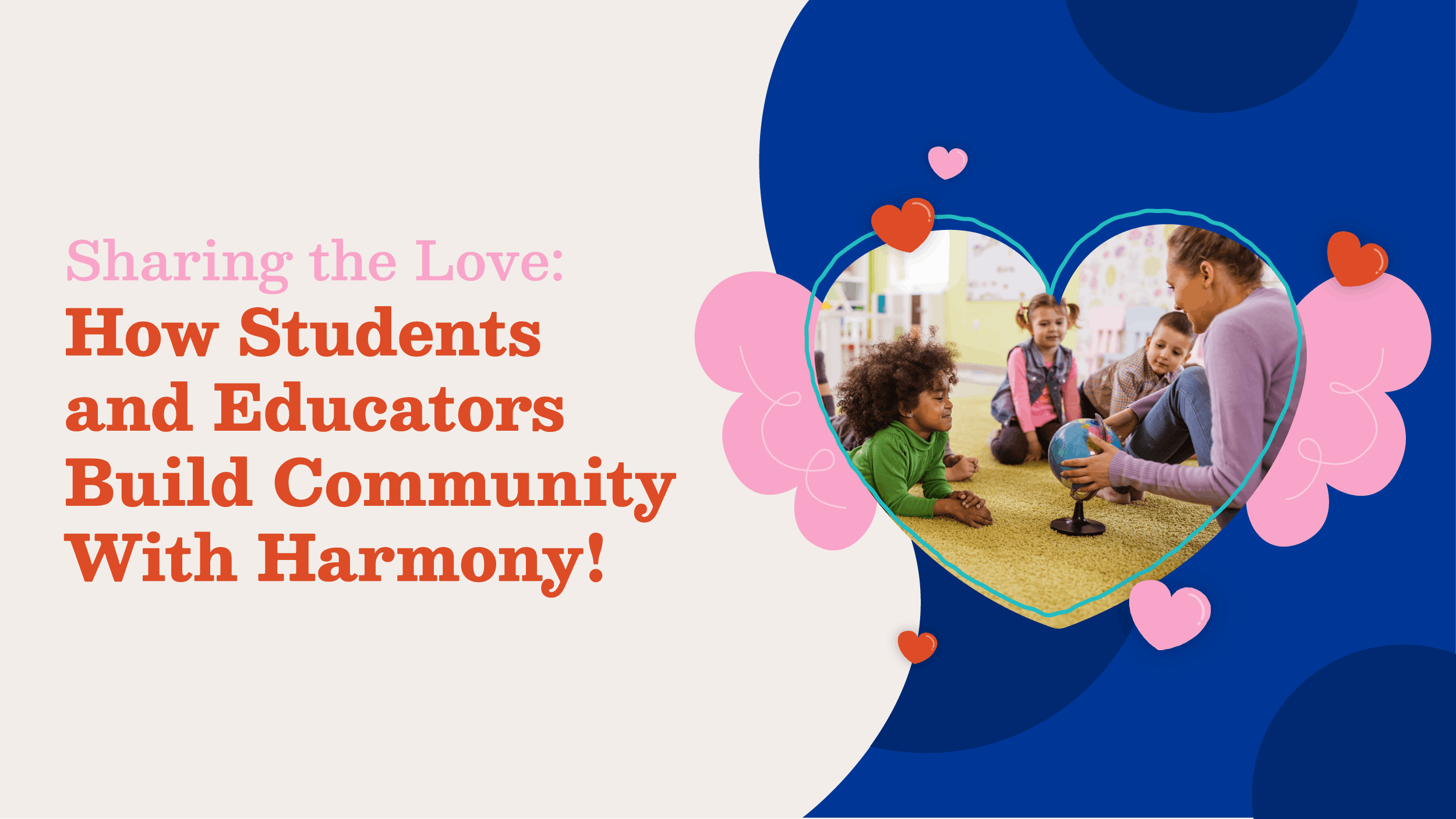
Sharing the Love: How Students and Educators Build Community With Harmony!
It’s that time of year to celebrate love in all its forms — love for ourselves, care for one another, and connection within our communities.
We asked our Educator Advisory Group to share how they use Harmony activities to help students thoughtfully exercise their voice and choice, build harmonious peer relationships, and nurture a strong sense of belonging in their learning spaces.

Student input is so crucial when it comes to Harmony in our academic spaces. Asking students to check in when arriving, and sharing how they feel about observable behaviors in the school community are just two routines that I incorporate on a daily basis with my 5th graders. This allows them to take ownership and hold themselves accountable through self-assessment. They have the opportunity to reflect on their choices, as well as on how the group can meet their personal and community goals. – Lee Eisen, 5th Grade, Brooklyn, New York

I incorporate the Harmony Curriculum in my Tier 2 small group meetings. During a small group meeting, it is important that every child feels “seen” and “heard”. I give every student an opportunity to use their voice by asking them open-ended questions that allow them to share their experiences and opinions. The other students practice active listening by leaning in and tracking with their eyes and bodies. They are also encouraged to ask follow-up questions, staying on the topic.
Many of the students I work with in small groups have suffered trauma in their lives. They are not usually the students who will actively raise their hands and participate in class when it is a large group. Small group settings offer a safe place for students to practice using their voice to gain self-confidence.
I love to offer students opportunities to show their learning in different ways during group time or during a counseling curriculum lesson. By offering students choices to demonstrate their learning, I can learn about the child’s preferred learning styles and their interests/talents. Sometimes students may choose to answer questions by drawing their answers, or using puppets/drama, or just talking about their answers instead of writing them. – Deborah Goodman, School Counselor, Elementary level, Las Vegas, Nevada

Student voice, student choice in all out-of- school time (OST) programming is the key to a successful structure. So many parts of the Harmony Curriculum can be used to design and implement quality programming.One of our favorite tools to use is the Quick Connection Cards to help youth find their voices! Our high school mentors, who support seven of our OST sites, love to lead these connections. Our youth love it too! Our mentors carry the printed cards in the back of their name tag badges to have an immediate plan to help as needed. We work with our mentor staff on how to modify or adjust a card as needed. This also gives our teens a voice and choice as well! These cards have been highly successful during our month-long summer program offering any teacher or staff member a fast, dependable way to engage with kids they may not be familiar with since many schools merge together for this camp experience. These cards really are a “quick connection” for any program! – Jennifer Wienke, Out-of-School Time Coordinator, Fairbanks, Alaska
Using the Harmony Everyday Practices helps our classroom community truly thrive.Each month, our class creates a Harmony Promise — with our Harmony Goals— for how we want to learn and grow together. These goals become part of our daily Morning Meeting, guiding the way we treat one another and approach our day. At the end of the month, students reflect together on what we’re doing well and what still needs work. Each month we revise our Harmony Promise based on their insights, ensuring that our classroom community is always growing, responsive, and student-driven! – Olivia Leone, 5th Grade, Milburn, New Jersey
I integrate the Harmony Curriculum with my students as a Reading Interventionist. Each day, I learn about how my students are feeling, what activities they participate in after school, and what they are interested in with the support of the Harmony Curriculum. I pull from a list of questions as well as the Quick Connection Cards to initiate conversation. The conversations prompt their writing.
I primarily teach early childhood students and the Quick Connection Cards assist myself and students in regard to my teaching of literacy. I’m able to learn what particular areas of reading and writing I need to work on with students through encoding, which allows me to see how students spell and write particular words. This informs how I teach students to decode. Decoding allows children to learn spelling patterns and blend sounds, which contributes to building fluency and confidence. I get to know students and their feelings.
These methods assist in continuing to establish and nurture relationships with students. – Stephanie M. Johnson, Reading Interventionist, Columbia, South Carolina
Join our Next Webinar!
Learn more about how school leaders can support systems for developing a strong sense of belonging and a love for community.
Related Posts